Your first yoga retreat: what to expect, day by day
A first yoga retreat is simpler than most people imagine: practice in the morning, good food, quiet afternoons and an early night. Here is what the days usually look like, how fit you need to be, what to pack and how to choose one that suits a beginner.
What should you expect from your first yoga retreat? Usually two classes a day, a more active one in the morning and a gentler one in the late afternoon, simple and generous meals, plenty of free time and earlier nights than you’re used to. You don’t need to be flexible, you don’t need to chant, and you can skip a class when your body says no. Details vary from retreat to retreat, so here is how a typical week unfolds and how to prepare for it.
What a typical day on a yoga retreat looks like
Schedules differ, but this rhythm is common on yoga retreats:
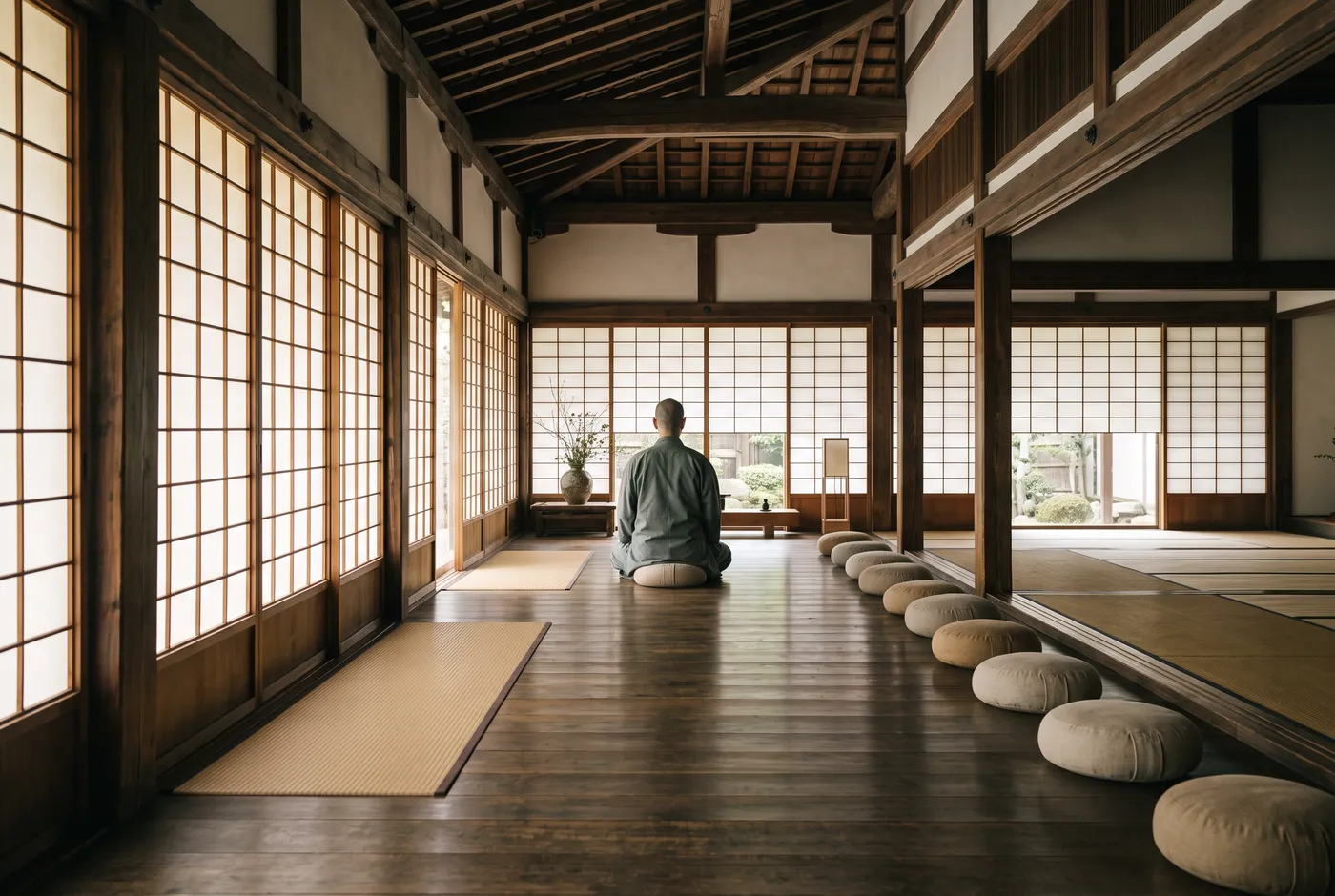
- 7:00 Tea or coffee, sometimes a short sitting meditation
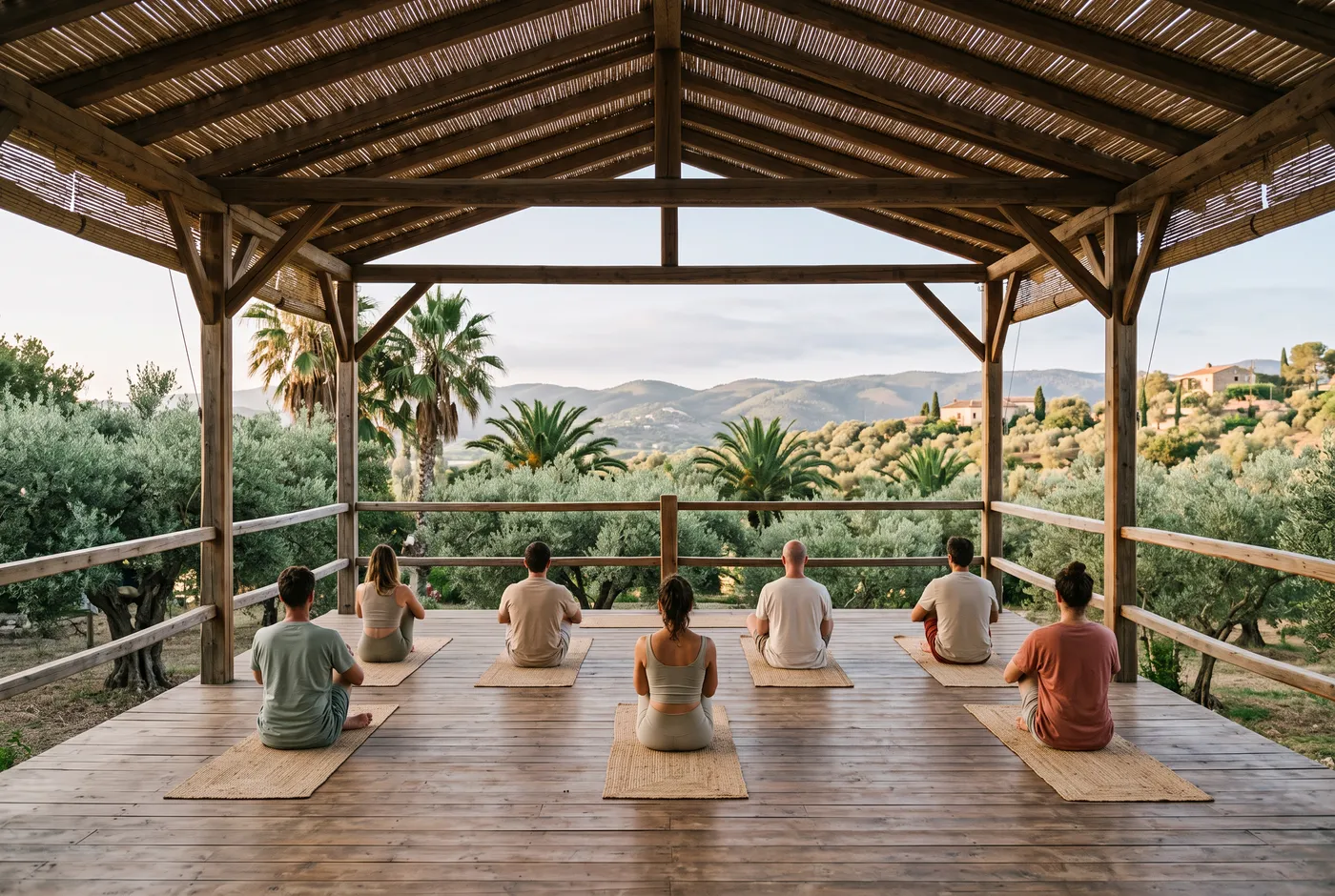
- 7:30 to 9:30 Morning class, usually the more active one: flowing sequences, standing poses, some strength work
- 9:30 Brunch or a late breakfast
- Late morning to afternoon Free time to sleep, read, swim, walk, book a massage or join an optional workshop or excursion
- 17:00 to 18:30 Afternoon class, usually slower: yin, restorative poses, long stretches, breathing
- 19:00 Dinner
- Evening Sometimes a talk, a short meditation or a fire; often nothing at all
That adds up to roughly three to four hours of practice a day, more than most people manage in a week at home. This is why the free time in the middle of the day matters, and why using it to rest is not lazy.
You will notice that breakfast often comes after the morning class. Most teachers suggest practising without a full stomach, so a piece of fruit or a cup of tea beforehand is usually plenty. If you need to eat something earlier, for whatever reason, just say so; nobody minds.
You don’t go on a yoga retreat to be good at yoga. You go to have time for it.
Your first yoga retreat, day by day
Everyone is different, but many first-timers notice a similar arc over a week.
- Day 1. Arrival, a welcome talk, often a gentle first class. You meet the group, choose your spot in the room and probably sleep well.
- Day 2. The first full day. The morning class may feel long, and muscles you had forgotten about make themselves known by the afternoon.
- Day 3. Often the low point: stiff legs, a dip in energy, sometimes unexpected emotion or a strong wish for coffee and your phone. It is normal, and it passes.
- Days 4 and 5. Things settle. The poses start to feel familiar, sleep deepens and the free afternoons feel like rest rather than waiting.
- Last day. A closing session, goodbyes, and quite often the wish that you had booked one more night.
The days after you get home matter too. Our guide to life after the retreat has ideas for keeping some of the calm.
How fit do you need to be for a yoga retreat?
Less than you think. If you can walk for half an hour comfortably and get down to the floor and back up again, you can join most beginner and all-levels retreats. Flexibility is not an entry requirement; it is something you practise. Good teachers offer easier versions of every pose and use props such as blocks, straps and bolsters so that nobody is left straining.
Tell the teacher about injuries, recent surgery, pregnancy or conditions such as high blood pressure, ideally on the booking form and again before the first class. If you are pregnant or have a heart condition or other health concerns, check with your doctor before booking and look for a teacher trained to adapt the practice for you.
Read the level description carefully. “Beginners welcome” and “all levels” are what you want. “Intermediate”, “advanced”, “intensive” or “Mysore-style” usually assume a regular practice.
Yoga retreat etiquette
- Arrive five to ten minutes early. Latecomers break the quiet at the start of class.
- Take your shoes off before the practice space, and leave your phone in your room or switched off.
- Walk around other people’s mats, not over them.
- Rest whenever you need to. Lying down or sitting out a pose is always allowed.
- Hands-on adjustments should only happen with your consent. If you would rather not be touched, tell the teacher before class.
- Put props back neatly, and stay for the final relaxation if you can; leaving during it disturbs everyone.
- Respect quiet hours. Some retreats keep the mornings silent until breakfast.
- Chanting is optional. Listen, join in or simply stay quiet.
What to pack for a yoga retreat
Pack light and in layers. Our packing list generator builds a checklist for your retreat type and destination. The essentials:
- Two or three sets of practice clothes you can move in, and that stay in place when you fold forward or turn upside down
- A warm layer and thick socks for meditation, final relaxation and cool mornings
- A light scarf or shawl, which doubles as a blanket in class
- Sandals or slip-on shoes for walking between rooms
- A refillable water bottle
- Earplugs and an eye mask, especially if you share a room
- Swimwear, sun protection and insect repellent for warm destinations
- A notebook, a book or two, and any regular medication, with a copy of the prescription
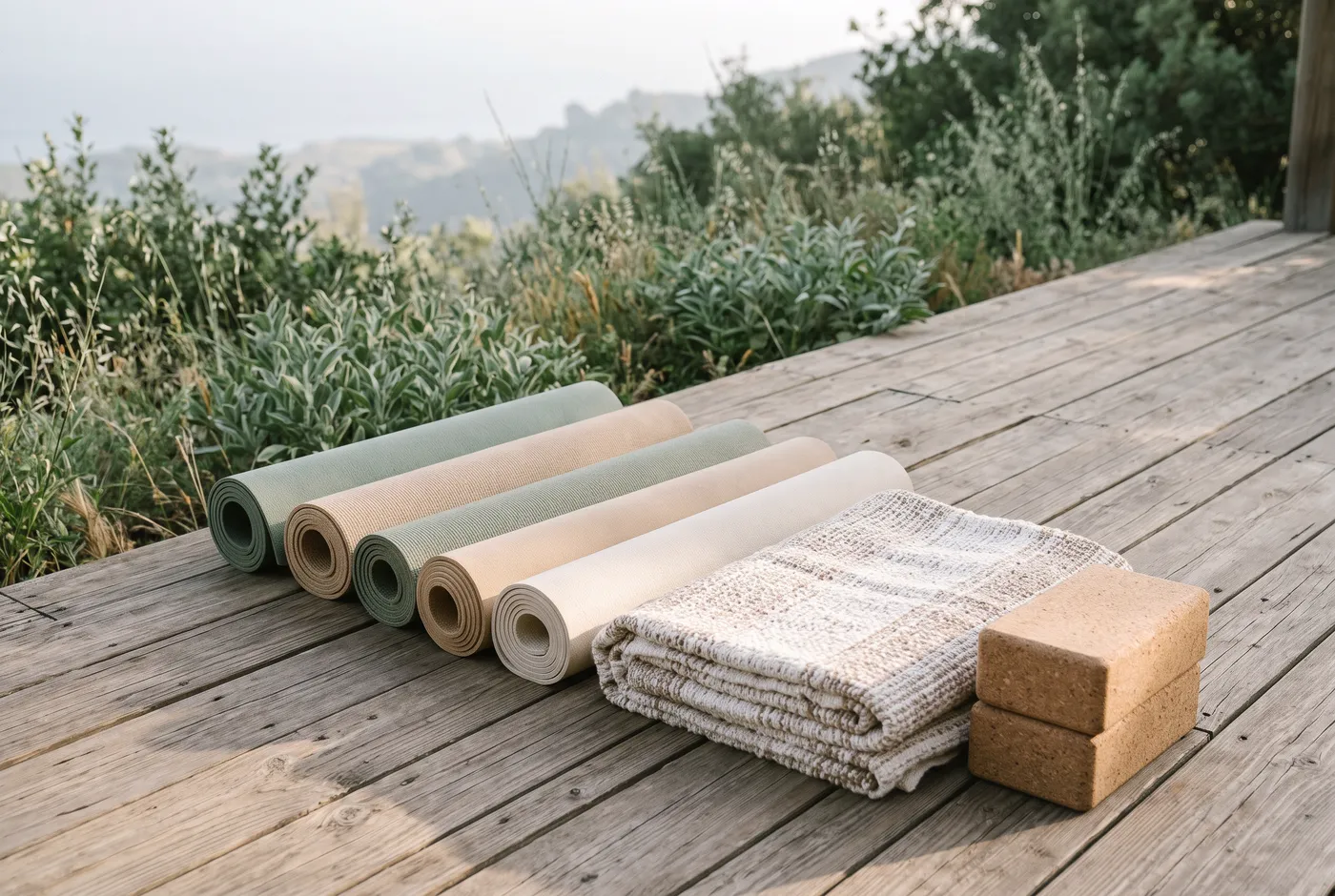
Most retreats provide mats and props. Bring your own travel mat only if you have a strong preference. Leave jewellery and anything precious at home; you will take rings and watches off for class anyway.
Common first-timer worries
- “I’ll be the least flexible person there.” Probably not, and nobody is watching. Groups usually mix complete beginners with people who practise regularly.
- “I’m going on my own.” Plenty of guests do. Shared meals make it easy to talk, and free time makes it easy not to. Read more about going on a retreat alone.
- “It will be too spiritual.” Retreats vary a lot. Read the schedule: some are mostly movement and rest, others include chanting, ceremonies or philosophy talks. Choose the one that suits you.
- “I’ll be hungry.” Food is often vegetarian and usually plentiful. Tell the host about allergies or dietary needs when you book.
- “I’ll be bored.” The free time can feel strange at first. Bring a book, walk, nap. By the third day, boredom often turns into rest.
- “I’ll be sore.” Some stiffness in the first days is common. Take the gentler options, drink water and use the afternoons to rest.
- “I’m too old, too stiff or not the right shape.” Good teachers work with the bodies in the room, not an ideal one. If you are unsure, tell the host your age and any limitations and ask how they would adapt the classes.
- “I won’t understand the teacher.” Many teachers use Sanskrit names for poses alongside English ones. You pick them up by watching, and nobody expects you to know them on day one.
How to choose a beginner-friendly yoga retreat
- Look for “beginners” or “all levels” in the description, and a teacher who explains poses rather than just naming them.
- Prefer gentler styles for a first time: hatha, slow flow, yin or restorative. Ashtanga and power yoga are more demanding and suit people who already train regularly.
- Keep it to between four and seven nights: long enough to settle in, short enough not to overload a body new to daily practice.
- Choose a small group, ideally under fifteen people, so the teacher can actually help you.
- Check that classes are optional and that afternoons are free.
- Stay fairly close to home. A short flight to Portugal or Mallorca means more time on the mat and less in transit, while Bali, with its long-established yoga scene, rewards a longer stay.
Still unsure which kind of retreat suits you? Try the retreat matcher, check the best months with when to go, or read our wider guide on how to choose a wellness retreat.
Questions people ask
Can I go on a yoga retreat as a complete beginner?
Yes. Many retreats are designed for beginners or all levels, and good teachers offer easier versions of every pose. Choose one that says so clearly and tell the teacher it is your first time.
How many hours of yoga a day is a typical retreat?
Usually two classes of roughly 60 to 120 minutes each, so around two to four hours a day, sometimes with a short meditation on top. Classes are generally optional, and skipping one to rest is completely normal.
What should I wear on a yoga retreat?
Comfortable, stretchy clothes that stay in place when you bend and fold, plus a warm layer and socks for the quieter sessions. Bring two or three sets so you can wash and dry them in between. Outside class, relaxed everyday clothes are fine.
Do I need to bring my own yoga mat?
Usually not. Most retreats provide mats, blocks and straps. Check the packing information from the host, and bring a light travel mat only if you prefer your own.
How long should my first yoga retreat be?
Four to seven nights suits most first-timers. Shorter stays barely get past the arrival days, and much longer ones can be a lot of practice for a body that isn’t used to it.