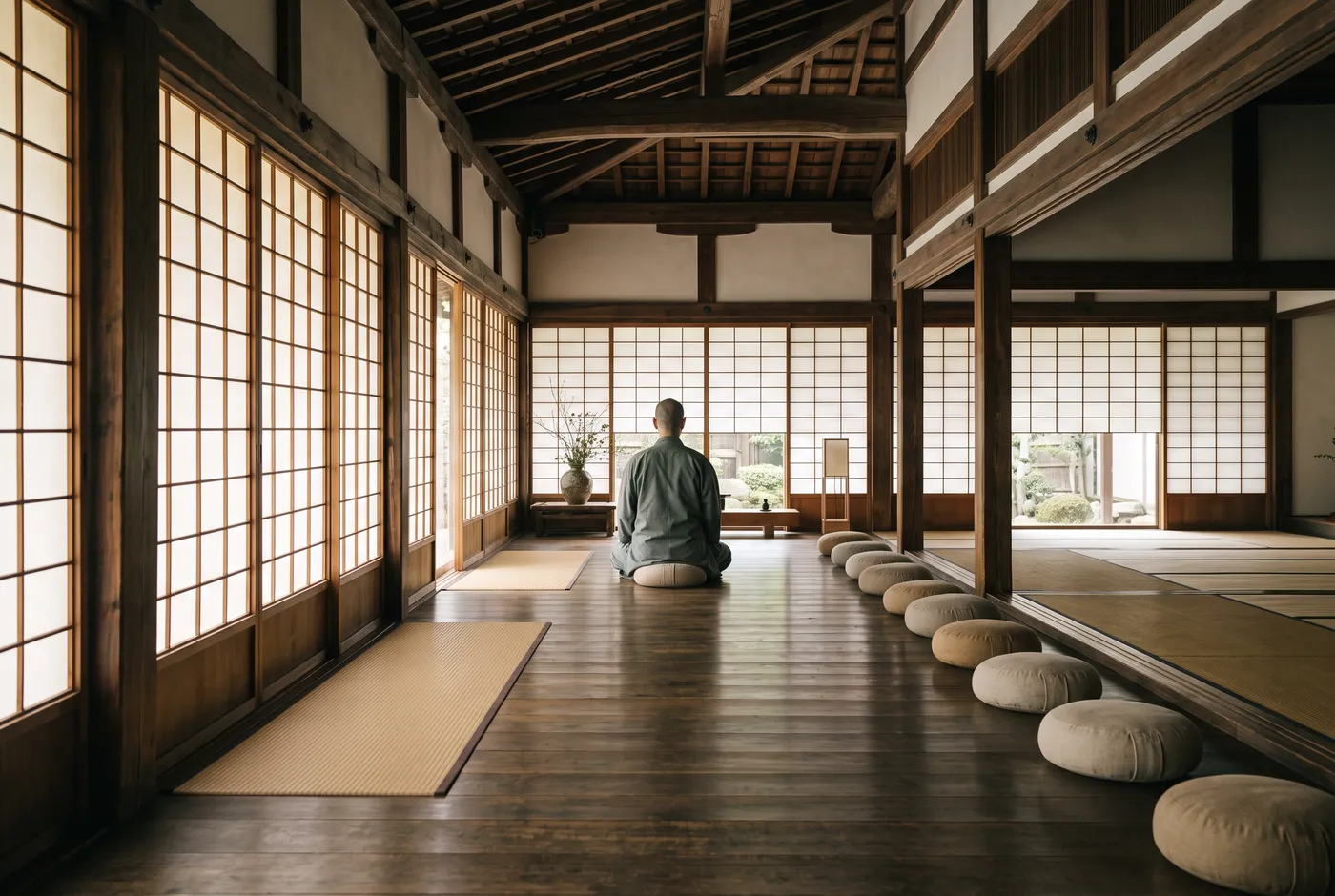
Meditation and silent retreats
A meditation retreat gives you days with almost nothing in them except attention. That sounds simple. It is also the most demanding kind of rest, and worth choosing with care.
Good for
- People with some practice who want to deepen it
- Curious beginners, on a short guided weekend first
- Anyone worn out by noise, talk and constant input
- Those at ease spending long hours with their own thoughts
Maybe not for
- Anyone in an acute mental-health crisis or soon after a trauma
- People hoping for a sociable holiday
A typical day
- Wake-up bell, tea and a first sitting of 45 minutes
- Breakfast in silence, then a short work period
- Instruction, then sitting and walking meditation in turns
- Lunch in silence and a rest
- Afternoon sittings and walking; short one-to-one check-ins
- Light supper
- Evening talk and a final sitting; lights out around 21:30
What a meditation retreat is
A meditation retreat is a period of guided, mostly silent practice, usually in a dedicated centre, a monastery or a quiet rural house. Formats range from a gentle weekend with plenty of instruction to ten days or more of intensive sitting. Most are rooted in a contemplative tradition, often Buddhist, though secular mindfulness retreats now use much the same structure without the religious framing.
Silent retreats keep what is often called noble silence: no conversation between participants, usually no eye contact, no phones, and sometimes no reading or writing. You can still speak to the teacher or staff whenever you need to. The silence is not a rule for its own sake. It removes the effort of being sociable, so your attention has nowhere to go but inward.
What actually happens
The day alternates between sitting and walking meditation. Sittings last 30 to 60 minutes; walking periods are slow and deliberate, often back and forth along a short path. A teacher gives instructions in the morning and a talk in the evening, and there are short interviews where you can ask questions. A daily work period, such as chopping vegetables or sweeping, is common and surprisingly welcome.
Vipassana-style courses, which focus on observing the breath and sensations in the body, often run for ten days on a demanding timetable that starts before dawn. Zen retreats, sometimes called sesshin, add formal ritual and longer seated periods. Mindfulness retreats tend to be gentler, with more guidance and shorter sittings. Whatever the format, the first two or three days are usually the hardest: the mind is busy, the body aches from sitting, and the lack of distraction can feel loud. For many people it settles after that. Sometimes it does not, and that is part of the practice too.
How to choose a good one
Start shorter than you think. A weekend or five-day retreat with clear instruction is a far better first step than a ten-day intensive, and our guide to what to expect at a silent retreat covers the first days in detail.
- A named tradition or approach, with a plain explanation of what is taught.
- Access to the teacher: group question times and, ideally, short one-to-one interviews.
- A registration form that asks about mental health, medication and previous retreat experience. This is a sign of care, not bureaucracy.
- Freedom to step out of a session or to leave early, stated clearly.
- Simple, adequate comfort: a quiet room, a warm meditation hall, and chairs as well as cushions.
Be cautious with groups that discourage questions, ask for large sums beyond the published fee, or tell you to stop prescribed medication. Those are reasons to look elsewhere.
Who leads, and what credentials mean
There is no universal licence for meditation teachers. In traditional settings, teachers are usually authorised by their own teachers after many years of practice, and a centre should be able to explain that lineage. Secular mindfulness teachers often hold a certificate from a structured teacher-training programme, which typically involves supervised teaching and regular retreats of their own. Either way, ask how long the teacher has practised, how many retreats they have led and how they support participants who struggle. Meditation teachers are not therapists, and a good one will say so.
Mental health: when to wait
Long periods of silence can bring up difficult feelings, memories or anxiety. For many people this is manageable. But intensive silent retreats are not recommended during an acute crisis, in the weeks after a major loss or trauma, or when a condition such as severe depression, psychosis, bipolar disorder or post-traumatic stress is unstable. If any of that applies, talk to a mental-health professional before you book, and consider a gentler format with more human contact, such as a nature retreat or a yoga week.
At the retreat, tell the teacher if things become too much. Opening your eyes, walking instead of sitting, or leaving early are all legitimate choices.
Practicalities and cost
Bring loose, warm layers, thick socks for the hall, a shawl or blanket for early sittings, earplugs and a simple alarm clock, since phones are usually handed in. If you plan to sit on the floor, practise a little beforehand; chairs are always fine. A few calm minutes a day with our breathing tool in the weeks before is gentle preparation.
As a rough guide in 2026, simple meditation centres in Europe typically charge €60 to €140 per night including meals, and some traditions run courses on a donation basis, with teachers supported by donations offered at the end. Plan the return as carefully as the retreat; our guide to life after the retreat helps. If silence sounds like too much, the other retreat types offer gentler ways in, and you can always ask us for suggestions.
Questions people ask
What is a silent retreat?
A silent retreat is a meditation retreat where participants do not talk to each other, usually for the whole stay. You still receive instruction, can ask the teacher questions and can speak to staff if needed. Phones are normally handed in, and some retreats also ask you not to read or write.
Can a beginner go on a silent retreat?
Yes, but start small. A weekend or five-day retreat with daily instruction is a good first step; a ten-day intensive is a big leap without prior practice. Sitting for 20 to 30 minutes a day for a few weeks beforehand makes the first days easier.
What if I cannot sit still for that long?
Almost nobody can at first. Sittings alternate with walking meditation, and you can use a chair, change position or stand at the back. Teachers expect restlessness and will help you work with it.
Is a silent retreat a good idea if I have anxiety or depression?
It depends on how you are right now. Intensive silent retreats are not recommended during an acute crisis or when a condition is severe or unstable. Talk to your doctor or therapist first, tell the retreat about your situation, and consider a shorter, gentler format.
How much does a meditation retreat cost?
As a rough guide in 2026, simple centres in Europe typically charge €60 to €140 per night including meals. Some traditions run courses on a donation basis, and teachers often rely on donations offered at the end. Comfortable retreat houses and hotels cost more.
Places that suit meditation retreats
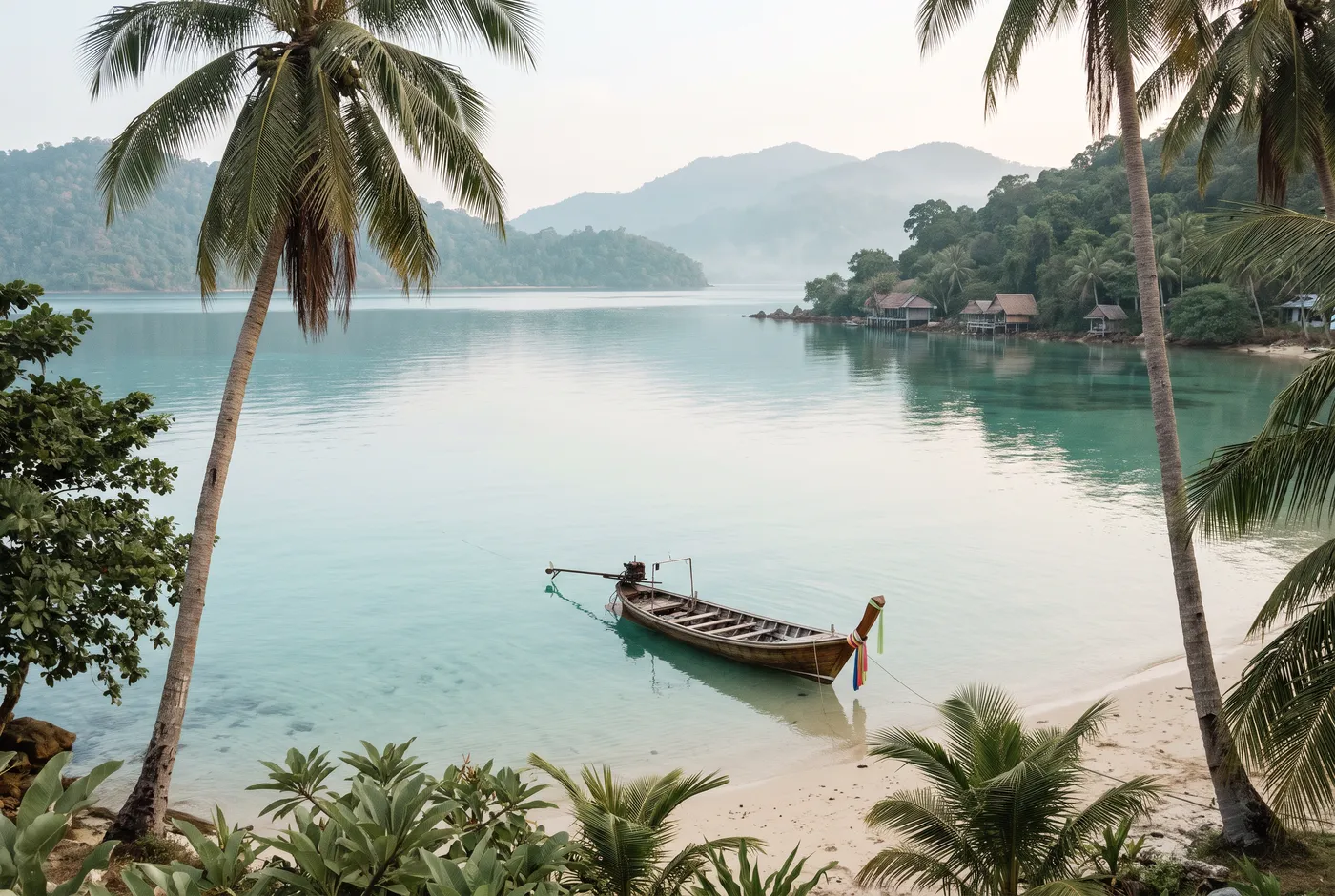

Thailand
Silent temple mornings in the north, yoga and island calm in the Gulf. Match the region to the month.
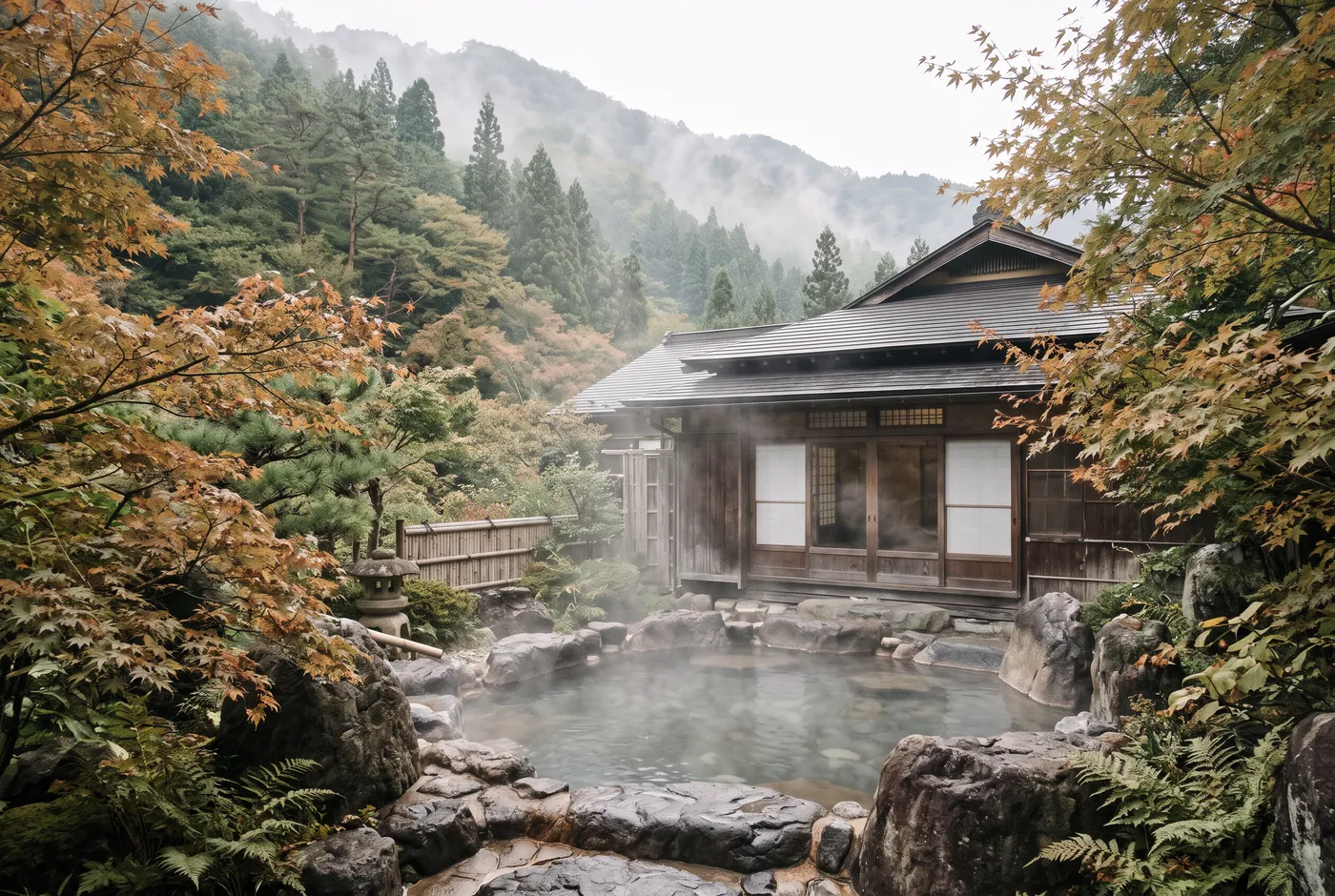
Japan
Temple lodgings, hot-spring baths and forest trails: Japan’s quiet side, best in spring and autumn.
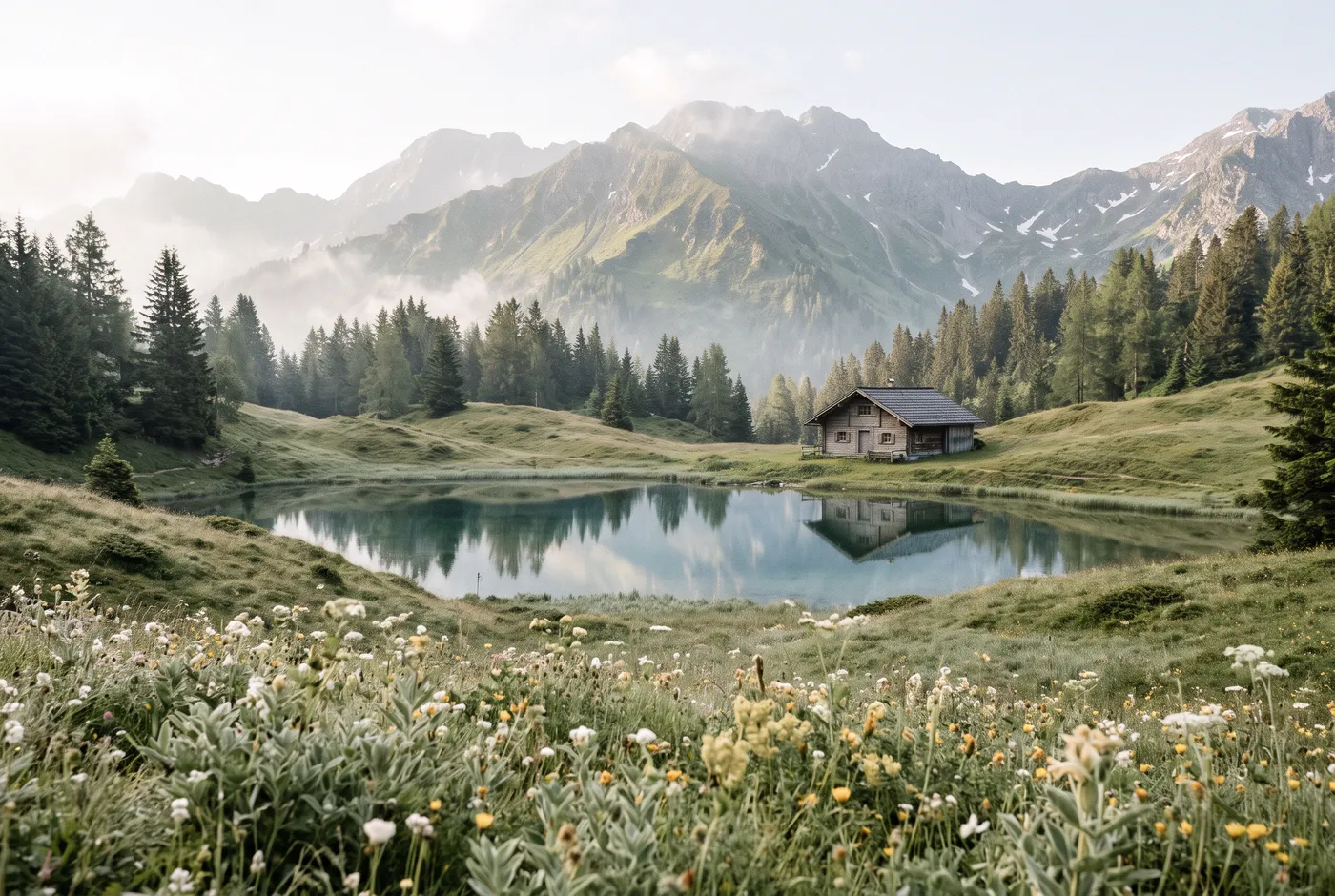
The Alps
Sauna culture, meadow walks and snowy silence, often just a train ride from home.
From the journal
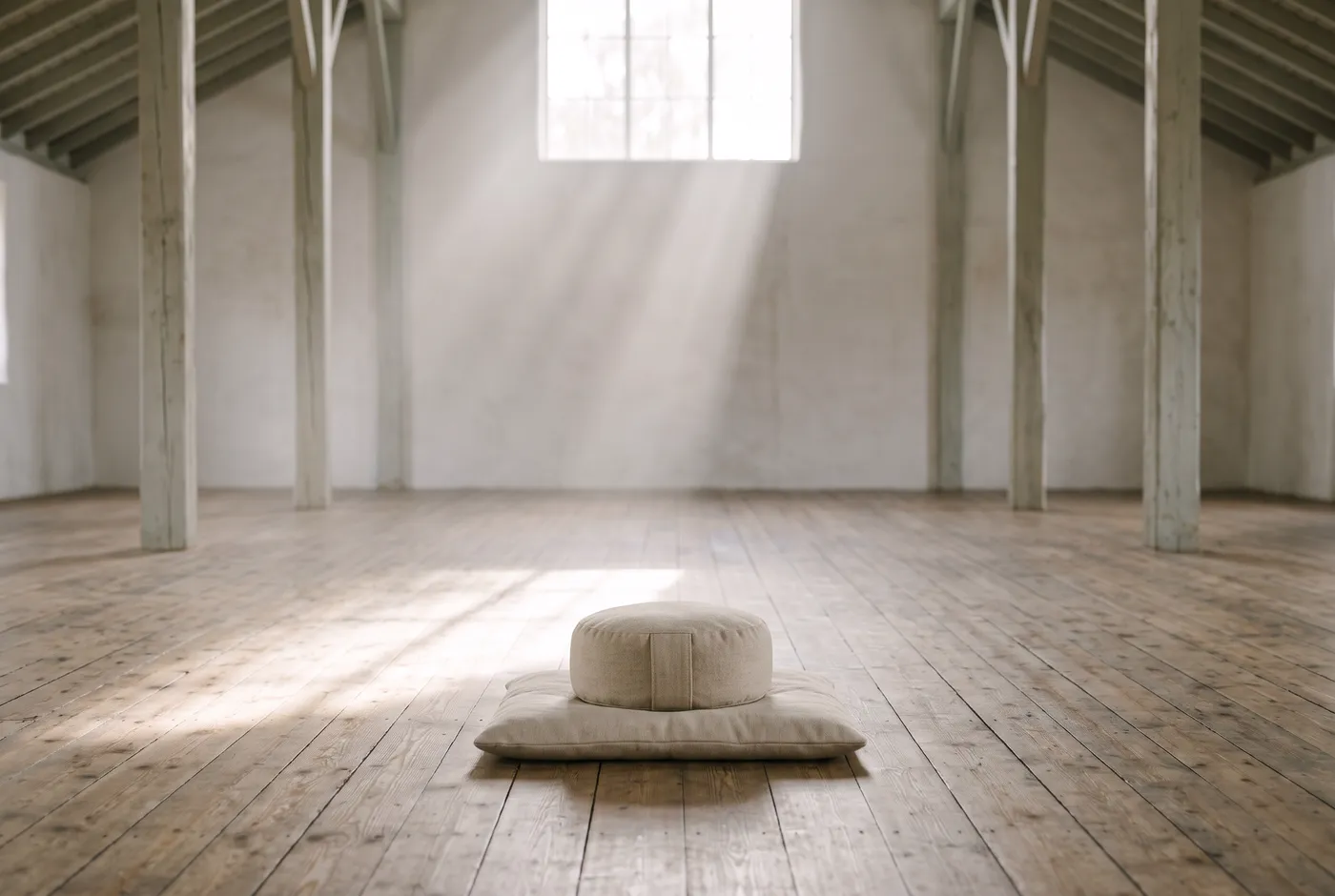
What actually happens at a silent retreat
The silence is the easy part. A realistic look at the schedule, the hard first days and the rules.
After the retreat: how to keep the calm when you get home
The calm came from conditions, not the place. How to rebuild a few of them once you are home.
Going on a retreat alone: what to know before you book
Why a retreat is one of the easiest ways to travel alone, and how to choose the format, room and place.
Tell us how you want to feel.
Send us your wishes in a few clicks. We read every message and reply personally with retreat types, places and good questions to ask hosts.
Plan your retreat